


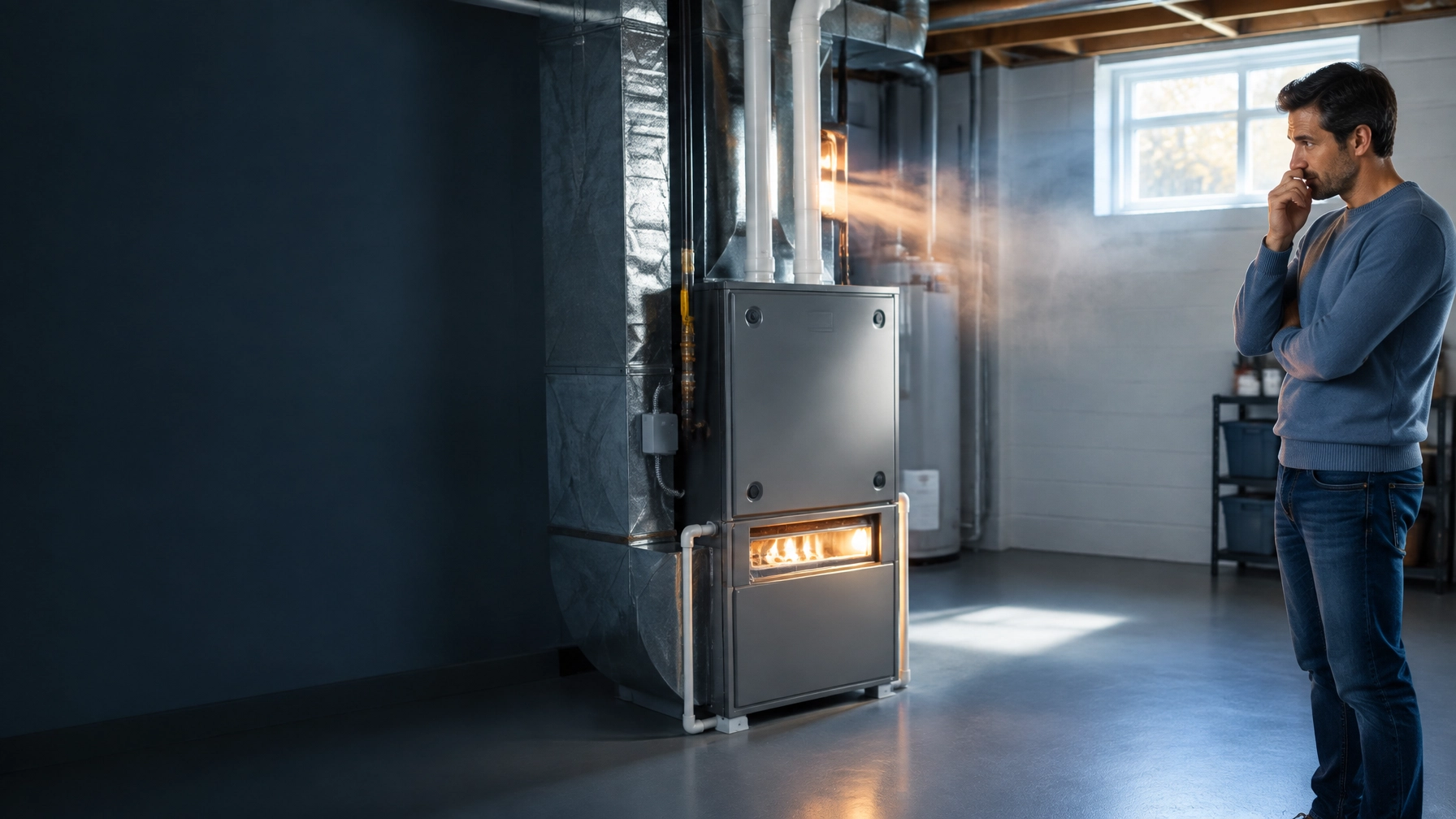
That first chilly morning in early October has a familiar Western New York soundtrack: the thermostat clicks, the furnace rumbles awake, and suddenly the house smells like something is burning.
Before you panic, take a breath. After sitting quietly through summer, many furnaces produce a faint, dusty odor during their first heating cycle. That smell is usually harmless and short-lived.
But not every furnace odor is a “let it run and see” situation. Some smells point to gas leaks, overheating electrical parts, blocked exhaust, or other problems that deserve immediate attention.
Here’s how to tell the difference, and what to do next.
Why your furnace smells dusty after sitting all summer
During the cooling season, dust settles on furnace components, inside the blower compartment, around the heat exchanger, and in parts of the ductwork. When the furnace starts heating again, those particles warm up and burn off.
The result is a dry, dusty, slightly burnt smell. It may remind you of an old space heater or a dusty radiator coming back to life.
A normal first-start odor usually has these characteristics:
- It appears during the first heating cycle of the season.
- It smells dusty or mildly burnt, not chemical, gassy, or electrical.
- It begins to fade as the furnace continues running.
- It is mostly gone within 30 to 60 minutes, though a very dusty system may take longer.
- You do not see smoke, sparks, or unusual furnace behavior.
If the smell is mild and clearly dusty, let the furnace run while you monitor it. Crack a window or run a bathroom exhaust fan if needed, and check the filter. A dirty filter can add to the odor and restrict airflow.

A first-start smell should not keep getting stronger, linger day after day, or return every time the furnace cycles. If it does, turn the system off and arrange a professional inspection.
The smells that mean “shut it down”
When the odor is sharp, chemical, gassy, metallic, or electrical, don’t try to diagnose it by standing beside the furnace for another hour. Your nose is useful, but it is not a combustion analyzer.
Musty or damp smell
A musty smell may come from a damp filter, moisture near the furnace, dirty ductwork, or microbial growth around an evaporator coil or drain pan. It is not automatically an emergency, but it should not be ignored, especially if the odor is strong or keeps returning.
Turn the furnace off if the smell is heavy or accompanied by weak airflow, water around the equipment, or visible buildup. Replace the filter if it is overdue, but avoid reaching deep into the equipment or spraying household cleaners inside it.
If the musty odor is mixed with a rotten-egg smell, treat the situation as a possible gas leak instead.
Rotten-egg or sulfur smell
Natural gas is intentionally odorized with a rotten-egg or sulfur-like scent so leaks can be detected. If you smell it near your furnace, gas piping, basement, or anywhere in the home:
- Leave the building immediately.
- Warn everyone else to get out.
- Do not turn lights or appliances on or off.
- Do not use a phone inside, light a match, smoke, or start a vehicle nearby.
- Once you are safely outside, call 911 and your gas utility’s emergency line.
- Do not re-enter until the fire department or gas utility says it is safe.
Do not stay inside to open windows or search for the source. If a door or window is already open as you exit, leave it that way, but getting outside is the priority.
After the gas utility clears the home, an HVAC professional can inspect the furnace, venting, ignition system, and connected gas piping. Evolution Heating & Air Conditioning provides 24/7 emergency heating service for urgent furnace concerns across Western New York.
Burning plastic, rubber, or electrical odor
A melting-plastic smell can indicate an overheating wire, motor, capacitor, control board, belt, or other component. A sharp electrical or ozone-like smell deserves the same caution.
Turn the furnace off at the thermostat. If you can safely reach the furnace switch or breaker without smoke, sparks, or heat coming from the unit, shut off power there as well. Open windows to ventilate, but do not remove panels or try to restart the system.
If you see smoke, sparks, or signs of fire, leave the home and call 911.
Acrid or metallic smell
A harsh acrid, hot-metal, or metallic odor is not a normal first-start dust smell. It can point to overheating metal, a failing motor, combustion trouble, or another problem that requires testing.
Shut the furnace off, ventilate the area if you can do so safely, and call for professional service. Don’t keep resetting the system to see if the smell disappears. A temporary reset does not fix the underlying issue.
Exhaust-like smell
An exhaust or flue smell inside the home may indicate a venting problem, improper combustion, a cracked component, or a blocked exhaust path. Fuel-burning equipment should send combustion gases outdoors, not into your living space.
Turn the furnace off and move to fresh air. If anyone has a headache, dizziness, nausea, unusual fatigue, confusion, or other symptoms, leave immediately and call 911.
Carbon monoxide itself has no smell. That means an exhaust odor is a warning sign, but the absence of an odor does not prove that everything is safe.
A quick first-start decision guide
Use this simple rule of thumb:
- Faint dusty smell that is fading: Monitor the furnace, check the filter, and ventilate lightly.
- Musty smell that keeps returning: Shut down if strong and schedule an inspection.
- Rotten-egg or sulfur smell: Leave immediately and call 911 and the gas utility from outside.
- Burning plastic, rubber, or electrical smell: Turn off the furnace and power if safe; call an HVAC professional.
- Acrid, metallic, or exhaust-like smell: Shut it down, get fresh air, and arrange urgent service.
- Smoke, sparks, or a carbon monoxide alarm: Leave the home and call 911.
When in doubt, treat the smell as abnormal. It is far better to have a technician tell you the odor came from harmless dust than to keep operating a furnace with an electrical or combustion problem.
Don’t forget your carbon monoxide detectors
Every home with a gas, oil, propane, or other fuel-burning appliance should have working carbon monoxide detectors on each level and near sleeping areas.
Test them before heating season begins. Replace batteries as needed, and follow the manufacturer’s replacement schedule for the detector itself. Smoke alarms and carbon monoxide alarms serve different purposes, so one does not replace the other.
If a CO alarm sounds:
- Get everyone outside immediately.
- Call 911 from outside.
- Do not go back in until emergency personnel say it is safe.
- Have the furnace and venting inspected before using the system again.
For additional gas safety information, review National Grid’s natural gas safety guidance.

A furnace tune-up can prevent some first-cold-morning surprises
The best time for a furnace tune-up is before the first serious cold snap, not after the furnace has stopped working on a 20-degree morning.
During a professional tune-up, a technician can inspect the burner and ignition system, check safety controls, evaluate airflow, examine venting, and identify worn or dirty components. Maintenance will not prevent every problem, but it can uncover concerns before they become a no-heat call.
That matters in Western New York, where a mild October afternoon can turn into a bitter Buffalo-area morning quickly. Homeowners in Tonawanda, Kenmore, Grand Island, Amherst, Williamsville, Niagara Falls, Hamburg, and nearby communities depend on their heating systems for more than convenience. They depend on them for safe, steady warmth.

When you need furnace repair in Western New York
If your furnace odor does not fit the normal dusty first-start pattern, professional diagnosis is the sensible next step. Evolution Heating & Air Conditioning has more than 30 years of hands-on HVAC experience in Western New York. Our licensed and insured technicians work on all makes and models, including furnaces, boilers, heat pumps, and ductless systems.
You can learn more about heating repair services or Tonawanda HVAC service if you are searching for furnace repair in Tonawanda, NY. We also serve Kenmore, Grand Island, Amherst, Williamsville, Niagara Falls, Hamburg, and surrounding areas.
We’re big enough to serve and small enough to care, which means we’ll explain what we find in plain English and help you make a safe, informed decision. If the smell is tied to a gas leak or another immediate hazard, follow the emergency steps first. Once the area is cleared, we’re available around the clock to help restore dependable comfort.
Furnace smell FAQs
How long should a first-start burning-dust smell last?
Most mild dust odors fade within 30 to 60 minutes. A very dusty system may take longer, but the smell should steadily weaken. If it remains strong, gets worse, or returns repeatedly, turn off the furnace and schedule service.
Is it safe to run my furnace if I smell gas?
No. Leave the home immediately, avoid anything that could create a spark, and call 911 and your gas utility from outside. Do not re-enter until the home has been cleared.
Can carbon monoxide smell like burning dust?
No. Carbon monoxide is odorless and cannot be detected by smell. That is why working carbon monoxide detectors are essential.
Should I replace my furnace filter before turning on the heat?
Yes. A clean filter supports proper airflow and can reduce dust circulating through the home. If the filter is heavily dirty, replace it before extended furnace use.
Who should I call for furnace repair near me?
For homeowners in Tonawanda, Kenmore, Grand Island, Amherst, Williamsville, Niagara Falls, Hamburg, and nearby Western New York communities, Evolution Heating & Air Conditioning provides furnace repair, maintenance, and 24/7 emergency heating service.