

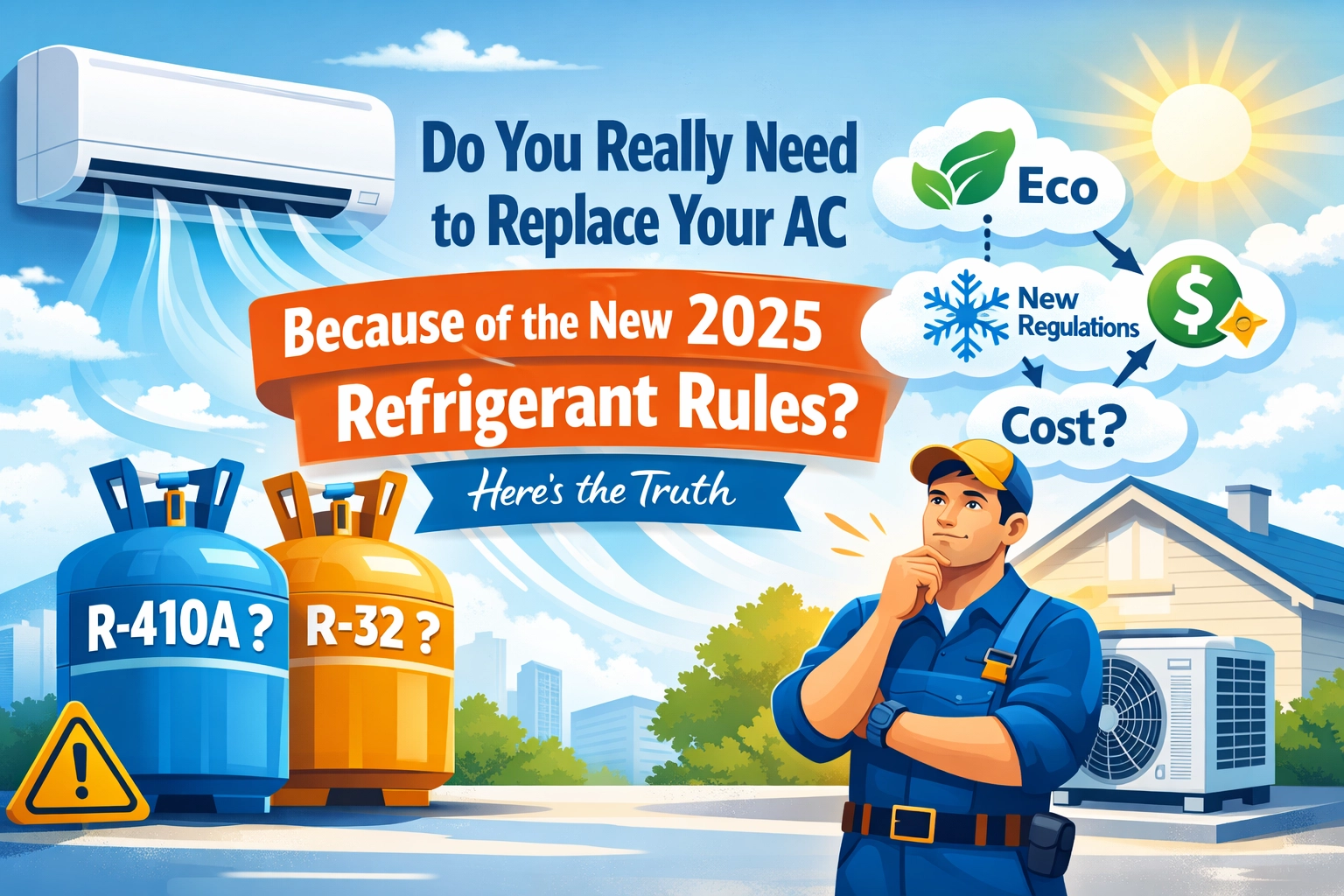
If you've been hearing buzz about new refrigerant regulations and wondering whether your AC is suddenly obsolete, take a deep breath. We've been getting tons of calls from concerned homeowners across Tonawanda, Kenmore, and the rest of Western New York asking the same question: "Do I need to replace my air conditioner right now?"
The short answer? No, you don't.
Let us break down what's actually happening with these new refrigerant rules, what it means for your existing AC system, and when you might eventually need to think about an upgrade. We promise to keep this simple and jargon-free: because nobody wants to wade through complicated EPA regulations when you just want to know if your cooling system is okay.
What the 2025 Refrigerant Regulations Actually Say
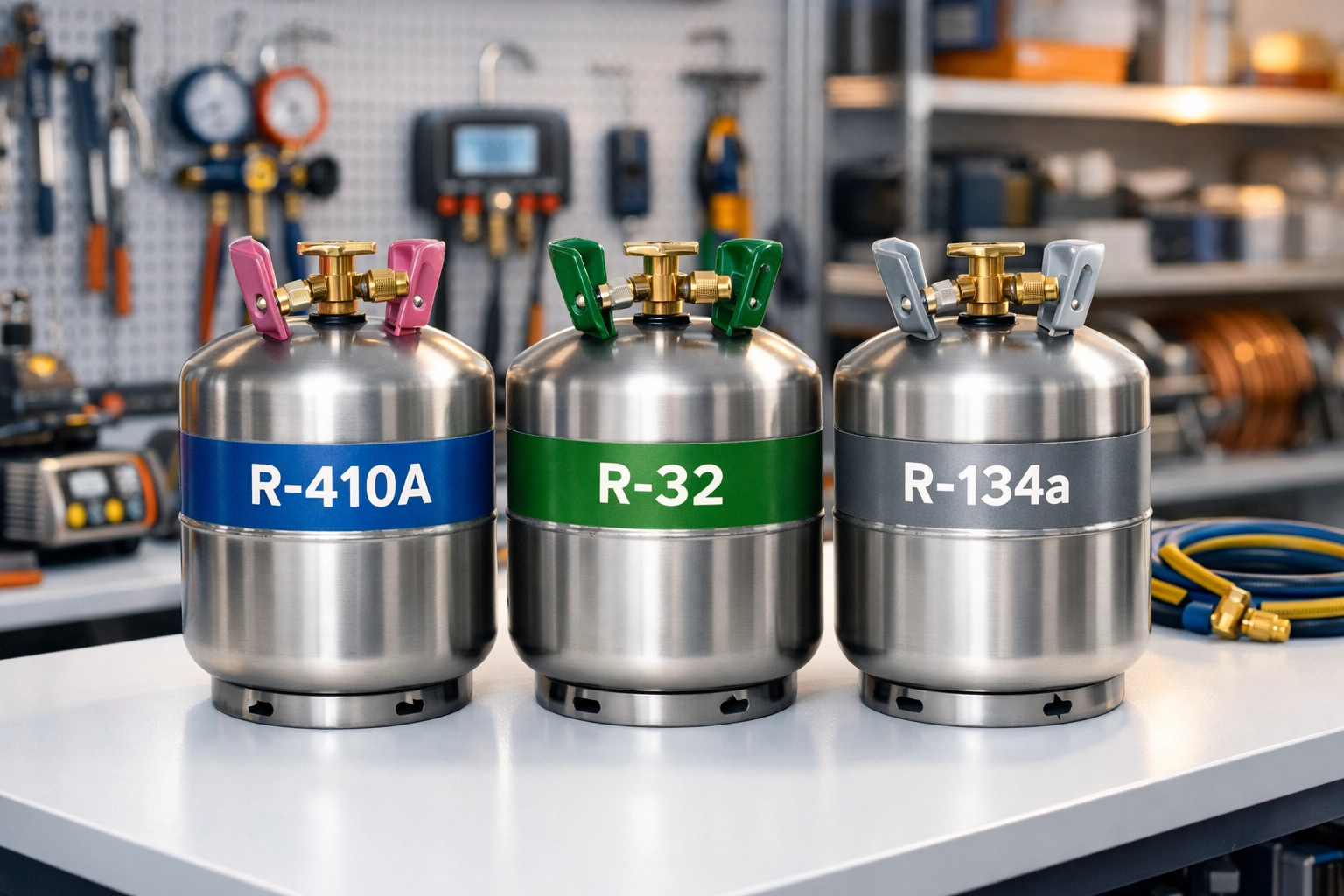
Here's the deal: On January 1, 2025, new EPA regulations kicked in that require manufacturers to stop producing air conditioning and heat pump equipment that uses refrigerants with a Global Warming Potential (GWP) above 700. The main refrigerant affected by this rule is R-410A, which has been the industry standard for residential AC systems for the past couple of decades.
Instead, new equipment now uses more environmentally friendly alternatives like R-454B and R-32, which have significantly lower GWP ratings: meaning they're much better for the environment.
But here's the critical part: These regulations apply to newly manufactured equipment coming off production lines. They don't apply to systems already installed in homes. Your current AC isn't suddenly illegal or required to be replaced just because the calendar flipped to 2025.
Think of it like this: When car manufacturers stopped making certain models, the cars already on the road didn't disappear. They kept running just fine.
Your Existing R-410A System Can Keep Cooling Your Home
If you have an air conditioner or heat pump that runs on R-410A refrigerant (and most systems installed in the last 15-20 years do), it will continue working exactly as it has been. You can keep using it, maintaining it, and repairing it.
The EPA regulations don't require homeowners to replace functioning equipment. Your AC that's been keeping you comfortable through Western New York's humid summers? It's still good to go.
So What's Actually Changing?
While you don't need to replace your system, there are some practical changes happening that are worth understanding:
R-410A Refrigerant Availability: As manufacturers shift their production to newer refrigerants, the supply of R-410A will naturally decrease over time. It's not going to disappear overnight: there will be refrigerant available for repairs and maintenance for years to come. However, as supplies get tighter, costs may gradually increase.
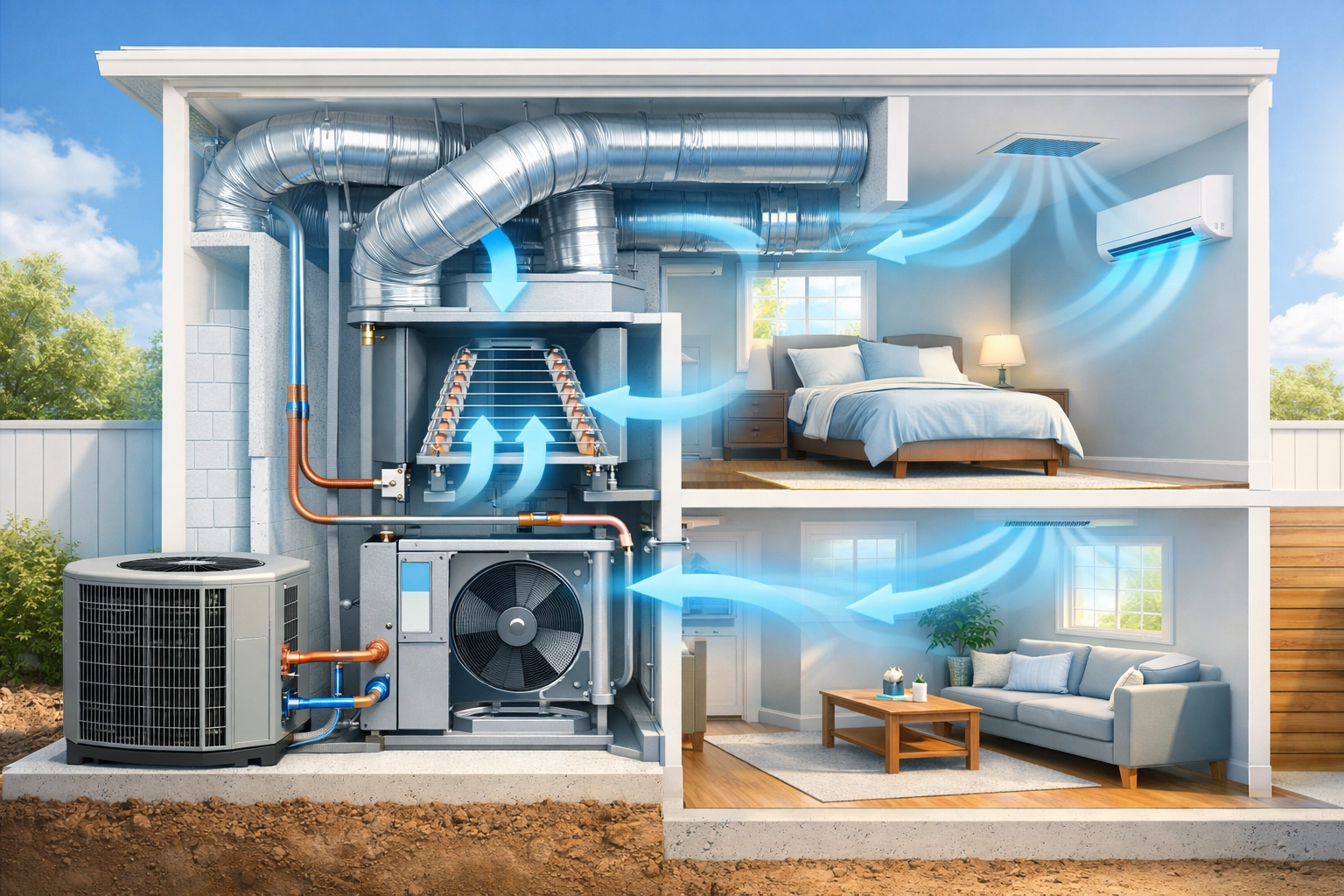
New Equipment Only: When you eventually do replace your AC system (because it's worn out, not because of regulations), the new unit will use one of the newer, lower-GWP refrigerants like R-454B or R-32. The good news? These new refrigerants are similar in performance to R-410A, so you won't notice a difference in cooling power.
Transition Period Considerations: Equipment manufactured before January 1, 2025, was allowed to be installed through January 1, 2026. Some HVAC companies may still have inventory of R-410A equipment, but moving forward, all new installations will feature the updated refrigerant technology.
When Should You Think About Repairs vs. Replacement?
This is where things get a bit more nuanced. Just like before these regulations, the decision to repair or replace your air conditioning system depends on several factors:
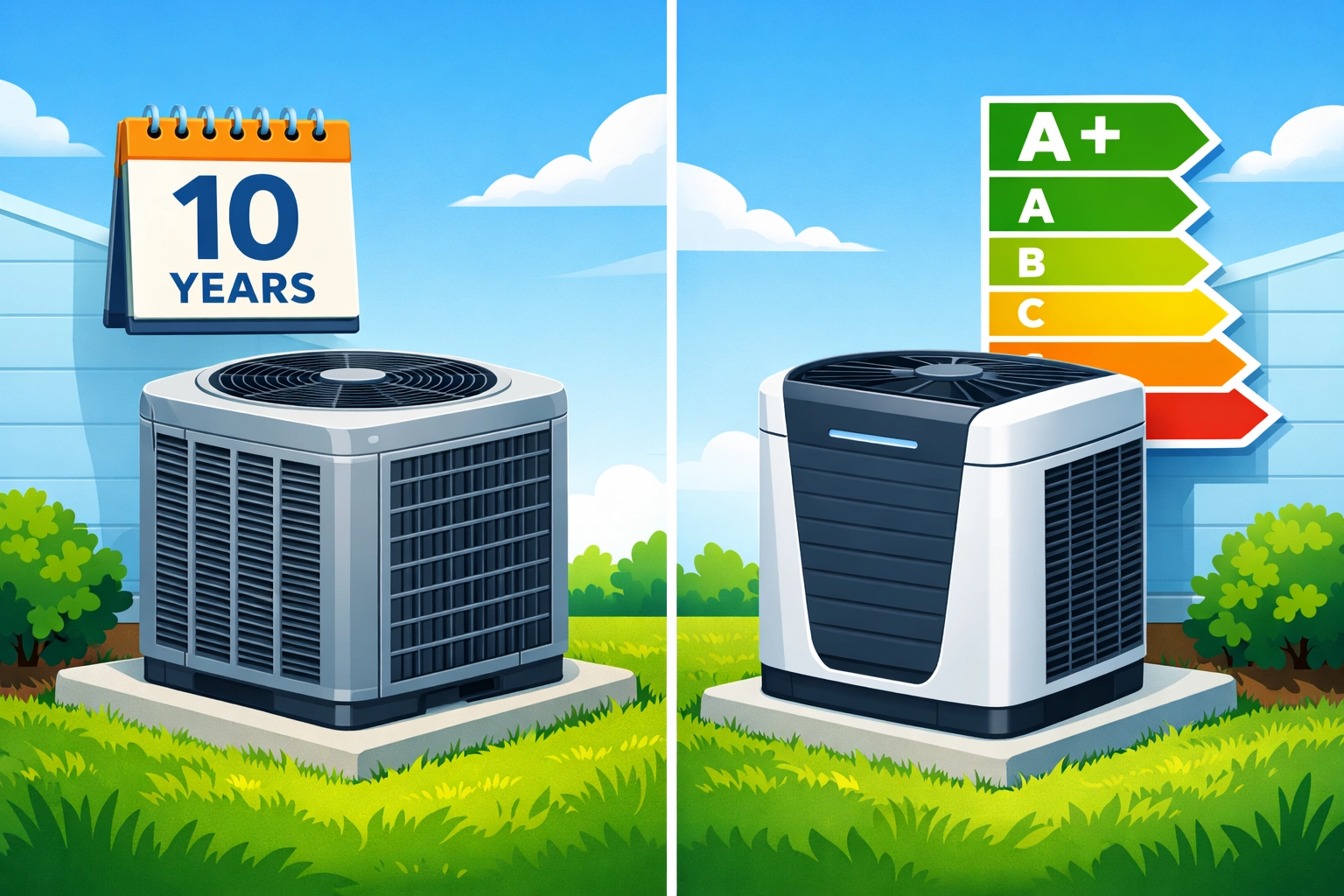
Your System's Age: If your AC is relatively new (under 10 years old) and needs a repair, it almost always makes sense to fix it. The system has plenty of life left, and R-410A refrigerant will be available for servicing.
The Cost of Repair: A good rule of thumb is the "50% rule": if the repair costs more than 50% of the value of a new system, replacement might be the smarter long-term investment.
Frequency of Breakdowns: If your AC has been nickel-and-diming you with multiple repairs each summer, it might be time to consider an upgrade regardless of the refrigerant situation.
Energy Efficiency: Older systems (15+ years) are significantly less efficient than today's models. Even before the refrigerant transition, upgrading to a newer unit could save you money on energy bills that offset the cost of replacement.
The refrigerant transition adds one more variable to this equation: If you have an older system that needs a major repair involving refrigerant, the cost of that repair might be higher than it would have been a few years ago, especially as time goes on and R-410A becomes less readily available.
What Evolution Heating & Air Conditioning Can Do for You
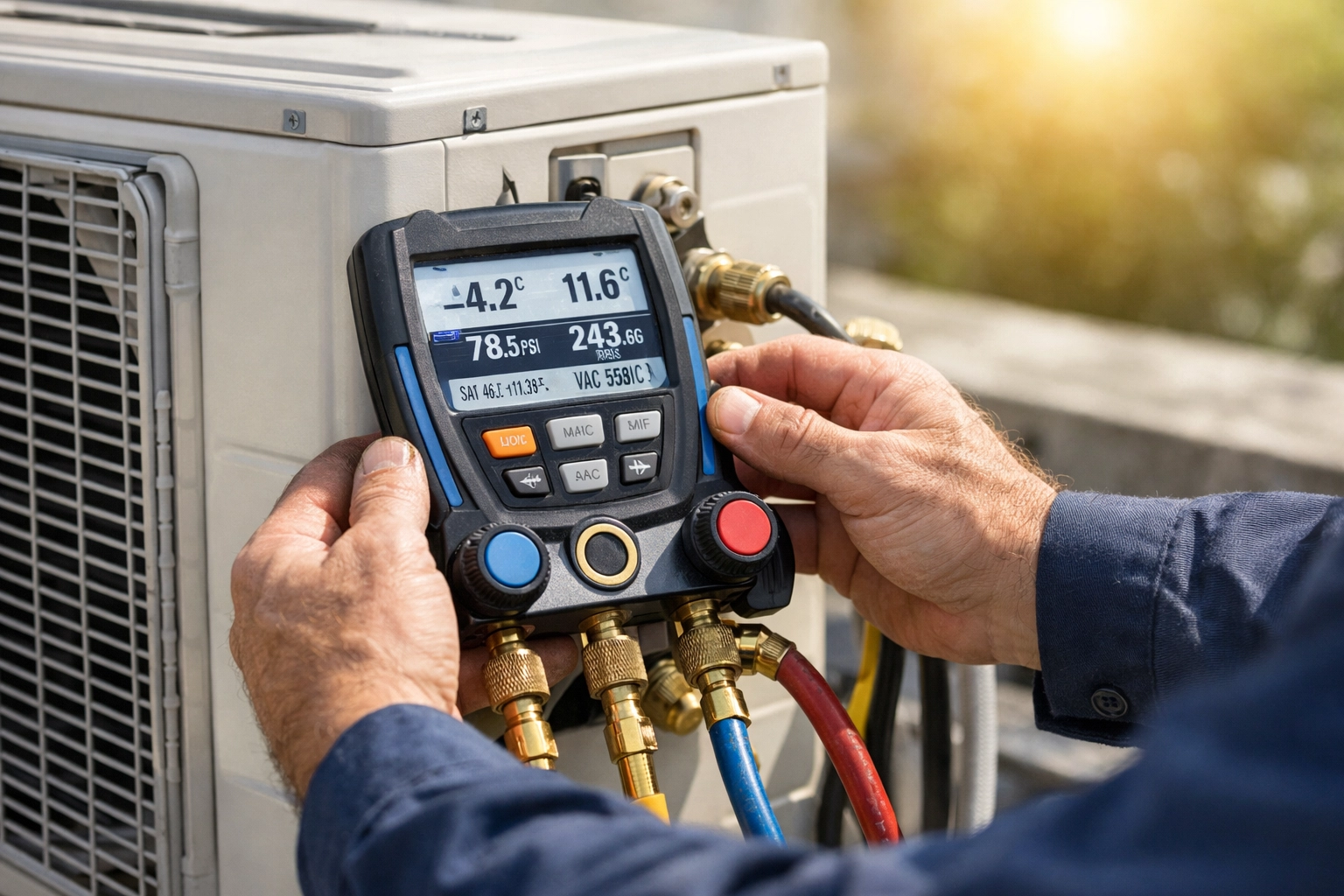
Here's where we can help clear things up for your specific situation. At Evolution Heating & Air Conditioning, we work on all makes and models of HVAC equipment: both older systems using R-410A and brand-new systems with the latest refrigerants.
We're Here 24/7: If your AC stops working on a sweltering July night, we've got you covered with emergency service. We understand that comfort can't wait, and we're always just a phone call away.
Honest Assessment: When you call us for AC repair, we'll give you straightforward advice about whether repair or replacement makes the most sense for your situation and budget. We're not going to push you to replace a perfectly good system just because of refrigerant regulations.
Expert Installation: When you do eventually need a new system: whether that's this year or five years from now: we're certified to install the latest equipment using R-454B, R-32, and other approved refrigerants. We stay up-to-date on all the latest technology and efficiency standards.
Big Enough to Serve, Small Enough to Care: We've been serving Western New York homeowners for years, and we pride ourselves on treating every customer like a neighbor. You're not just a number to us: we genuinely care about keeping your home comfortable year-round.
The Bottom Line: Don't Panic, But Stay Informed
The 2025 refrigerant regulations are about protecting the environment by phasing out high-GWP refrigerants in new equipment. They're not about forcing homeowners to rip out functioning AC systems.
Your current system can keep running. Repairs are still possible. And when the time comes for replacement: whether that's determined by the age of your equipment, repair costs, or efficiency concerns: you'll have great options available with the new refrigerant technology.
Making the Right Decision for Your Home
Every home and situation is different. Maybe your AC is already on its last legs and this is the perfect time to upgrade to a more efficient system. Or maybe you have a 5-year-old system that just needs a minor tune-up to keep running smoothly for another decade.
The best way to know what makes sense for your home is to have a conversation with HVAC professionals who know Western New York's climate and can assess your specific system.
We're happy to come out, take a look at your AC, and give you honest recommendations: whether that's a simple repair, regular maintenance to extend your system's life, or discussion about new installation options if replacement makes sense.
Ready to Talk About Your AC System?
If you have questions about your specific air conditioning system and what these refrigerant changes mean for you, we're here to help. Whether you're in Tonawanda, Kenmore, Grand Island, Amherst, or anywhere else in Western New York, Evolution Heating & Air Conditioning is your local expert for all things HVAC.
Give us a call or reach out through our website. We'll answer your questions, assess your system, and help you make the best decision for your home and budget. No pressure, no runaround: just honest advice from people who care about keeping you comfortable.
Because at the end of the day, that's what matters most: a cool, comfortable home when you need it, and a trusted local team you can count on to keep things running smoothly.